

For decades, business leadership and product thinking lived in different rooms.
CXOs defined strategy, revenue targets, and operational priorities, while product teams built the tools and systems that powered the organisation. This separation worked in a world where technology evolved slowly, and digital infrastructure simply supported the business.
But artificial intelligence has fundamentally changed that equation.
Today, the architecture of a company’s systems determines how fast it learns, how efficiently it operates, and how well it competes. Every workflow, decision pathway, and customer interaction is increasingly shaped by software and intelligent automation.
This shift means leadership itself must evolve.
Modern CXOs must begin thinking like product architects.
Not because they need to write code, but because the way their organisation’s systems are designed now directly impacts performance, efficiency, and scalability.
The Shift From Managing Departments to Designing Systems
Traditional organisations were built around departments: sales, marketing, operations, finance, and customer service.
Each department optimised its own tools and processes. Over time, this created the modern enterprise stack, dozens of SaaS platforms, isolated data silos, and manual handoffs between teams.
At first, this fragmentation is manageable.
But as organisations grow, these silos quietly become a tax on productivity.
Teams spend hours every week moving data between systems, reconciling reports, and coordinating workflows manually.
In fact, many mid-sized organisations discover that a significant portion of employee time is spent simply transferring or validating information between systems rather than making decisions or driving growth.
Organisations that transition from fragmented systems to integrated operational architectures often see up to a 30% reduction in “data drudgery”, the time teams spend manually moving or reconciling data between tools.
Artificial intelligence magnifies this difference.
AI systems thrive when they can access connected data and orchestrate workflows across platforms. In fragmented environments, AI becomes another disconnected tool rather than a multiplier of operational intelligence.
This is why forward-thinking CXOs are shifting their mindset.
Instead of managing tools and departments, they are designing systems and operational architecture.
AI Is Not Just a Tool, It’s an Operational Layer
Many organisations still approach AI as an experiment.
They deploy chatbots, automate isolated workflows, or test generative AI tools for internal productivity. These initiatives often produce incremental improvements, but they rarely transform the organisation.
That’s because AI is not simply another application in the technology stack.
It is becoming an operational layer that connects systems, interprets data, and assists decision-making across the entire organisation.
When integrated properly, AI can:
- Connect data across disconnected systems
- Detect operational inefficiencies before they escalate
- Automate routine coordination between departments
- Predict customer behaviour and operational demand
- Enable faster, more informed decision-making
But this kind of intelligence cannot be added toa fragmented infrastructure.
It must be designed into the system architecture itself.
What Product Architects Understand That Many Leaders Miss
Product architects rarely begin with tools.
They begin with flows.
They analyse how information moves through a system, where decisions are made, and where friction occurs.
They ask questions such as:
- How does information move between systems?
- Where are decisions delayed or blocked?
- Which tasks are repetitive and predictable?
- What processes should be automated?
- How should systems communicate with each other?
When CXOs adopt this mindset, the AI conversation changes dramatically.
Instead of asking:
"Which AI tools should we buy?"
They begin asking:
- Where does our organisation lose operational momentum?
- Which workflows rely on manual coordination?
- Where does data get trapped between platforms?
- How can intelligent systems augment human decision-making?
This shift turns AI from a technology experiment into an operational redesign strategy.
The Companies That Win Will Architect Their Operations
The organisations gaining the most value from AI are not necessarily the ones using the most tools.
They are the ones building intelligent operational architectures.
These companies treat their operations the same way product teams treat digital platforms: as systems that evolve continuously.
They build environments where:
- Data flows seamlessly across systems
- AI assists decision-making across departments
- Automation handles repetitive operational tasks
- Teams focus on strategic and creative work
The result isn’t just efficiency.
It’s organisational speed.
Decisions happen faster. Insights appear earlier. Teams spend less time navigating systems and more time solving problems.
The Architecture of an AI-Enabled Organisation
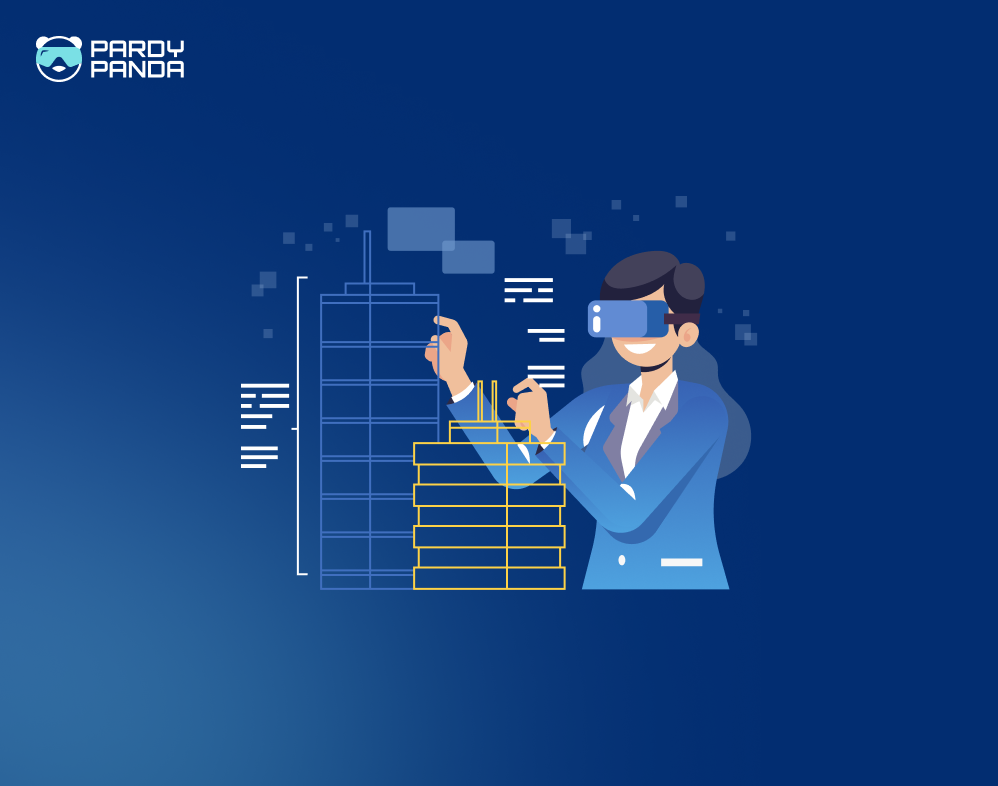
A helpful way to understand this shift is to visualise how operational structures are evolving.
Traditional Model:
Departments operate with their own tools and processes, connected through manual coordination.
AI-Driven Model:
Systems are interconnected, data flows freely, and AI acts as an intelligence layer that enhances workflows across the organisation.
This architectural shift transforms how organisations operate, from fragmented workflows into intelligent systems.
From Tool Buyers to System Designers
For many CXOs, the biggest transformation is moving from a purchasing mindset to an architectural mindset.
Buying tools solves short-term problems.
Designing systems solves structural ones.
This means leadership must start asking deeper questions:
- How do our core workflows actually function today?
- Where do teams rely on spreadsheets to bridge system gaps?
- Which systems should serve as the single source of truth?
- Where can AI augment human decision-making?
These questions are not purely technical; they are strategic.
They determine whether an organisation becomes operationally intelligent or increasingly constrained by complexity.
The Future Belongs to Architect-Leaders
In the AI era, leadership is no longer only about setting strategy.
It’s about designing how the organisation actually works.
The companies that thrive will be led by executives who treat workflows as systems, data as infrastructure, and AI as an intelligence layer embedded across operations.
The most effective CXOs won’t just manage growth.
They will architect it.
And the organisations they lead will function not as disconnected departments, but as intelligent systems built for scale, adaptability, and continuous innovation.
Architect Smarter Operations with Pardy Panda Studios
At Pardy Panda Studios, we believe AI transformation isn’t about chasing the newest tools.
It’s about designing smarter systems.
Our team helps organisations move from fragmented technology stacks to intelligent operational architectures that scale.
We work with leadership teams to:
- Identify operational bottlenecks caused by disconnected systems
- Design AI-enabled workflows that improve decision-making
- Integrate automation across existing platforms
- Build scalable digital infrastructure for future growth
Because in the age of AI, success isn’t determined by how many tools you adopt.
It’s determined by how intelligently your systems work together.
If your organisation is exploring how AI can reshape operations, we’d love to help you architect the next chapter.
After all, every great system deserves thoughtful design, even if it’s built with a little panda-level curiosity.
Schedule a strategy call with Pardy Panda Studios and start building smarter operations.
Frequently Asked Questions
Why should CXOs think like product architects?
Because modern businesses operate through interconnected systems. Leaders who understand how workflows, data, and technology interact can design organisations that operate faster and scale more effectively.
Is AI adoption mainly a technology challenge?
No. The larger challenge is operational design. AI becomes powerful only when systems, workflows, and data are structured in ways that allow intelligence and automation to operate across the organisation.
Do executives need technical expertise to lead AI transformation?
Not necessarily. CXOs don’t need to build systems themselves, but they must understand how operational architecture influences performance, efficiency, and decision-making.
What is the biggest mistake companies make when adopting AI?
Treating AI as a standalone tool rather than integrating it into operational workflows. Without system-level integration, AI initiatives often remain isolated experiments.
Does this mean companies will eliminate middle management?
Not at all.
In fact, AI-driven operational design often elevates middle management roles.
Instead of spending time gathering reports or coordinating between systems, managers can focus on higher-value work, interpreting insights, guiding teams, and making better strategic decisions.
AI removes administrative friction so leaders at every level can focus on decision-making rather than data movement.
.png)
